
James Baldwin: A Prolific Voice of Truth and Transformation
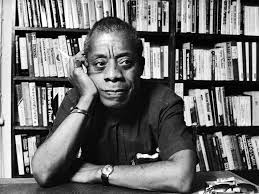
James Baldwin remains one of the most profound and influential writers of the 20th century. His ability to confront uncomfortable truths about race, identity, and social justice, combined with his literary genius, cements his place as a cornerstone of American literature and cultural thought.
A novelist, essayist, playwright, and poet, Baldwin used his pen to interrogate the complexities of human experience, with a sharp focus on the intersections of race, sexuality, and society. Decades after his passing, his words continue to resonate, inspiring new generations of artists, thinkers, and activists, including those in the Black Lives Matter and LGBTQ+ movements.
Early Life and Formative Years
Born on August 2, 1924, in Harlem, New York City, Baldwin grew up in a working-class environment under the strict guidance of his stepfather, a preacher. The struggles of his early life, compounded by systemic racism and poverty, would shape his worldview and artistic voice. Despite these challenges, Baldwin exhibited a precocious talent for writing. By his teenage years, he had already begun to explore his passions for literature and religion, often questioning their role in shaping human morality and societal norms.
At 24, Baldwin made a pivotal decision to move to Paris, seeking escape from the suffocating racism of the United States and the limitations it placed on his artistic growth. This expatriation was not an act of abandonment but rather a strategic move to gain the distance needed to critically examine his homeland. His time abroad allowed him to view American society through a clearer lens, deepening the incisiveness of his critiques.
The Literary Genius
Baldwin’s body of work spans multiple genres, each marked by its eloquence and unflinching honesty. His debut novel, Go Tell It on the Mountain (1953), is a semi-autobiographical exploration of religion, family, and identity, rooted in his experiences growing up in Harlem.
The novel not only introduced Baldwin as a major literary talent but also established his ability to interweave the personal with the political.
His essays, collected in works such as Notes of a Native Son (1955) and The Fire Next Time (1963), are perhaps his most celebrated contributions to American letters. Baldwin’s essays are masterpieces of clarity and urgency, tackling issues like systemic racism, civil rights, and the hypocrisies of American democracy. In The Fire Next Time, Baldwin warned of the consequences of racial injustice with prophetic clarity: “If we do not now dare everything, the fulfillment of that prophecy, re-created from the Bible in song by a slave, is upon us: God gave Noah the rainbow sign, no more water, the fire next time!”
His other works, including Giovanni’s Room (1956), broke ground in their exploration of homosexuality and identity, offering a rare and nuanced portrayal of queer love during a time of widespread social conservatism. Baldwin’s courage in writing about his own sexual orientation and his refusal to conform to societal expectations made him a trailblazer in LGBTQ+ literature.
The Activist and Public Intellectual
Baldwin’s impact extended beyond the written word. During the Civil Rights Movement, he became a prominent voice advocating for racial equality. He forged alliances with leaders such as Martin Luther King Jr., Malcolm X, and Medgar Evers, though he often maintained an independent stance, unaligned with any single ideology or organization. Baldwin’s speeches and public appearances during this time reflected the same passion and insight found in his writings. His ability to articulate the pain and promise of the Black experience made him a powerful force for change.
His reflections on race and power remain eerily relevant in contemporary discourse. Movements like Black Lives Matter draw heavily on Baldwin’s insights, using his words to highlight the ongoing struggle against systemic racism. For example, his observation that “not everything that is faced can be changed, but nothing can be changed until it is faced” continues to inspire activists fighting for justice and equity.
Legacy and Continued Relevance
James Baldwin’s enduring influence can be seen in the works of contemporary writers, filmmakers, and thinkers. From Ta-Nehisi Coates to Barry Jenkins, whose adaptation of Baldwin’s novel If Beale Street Could Talk (2018) brought his work to a new generation, Baldwin’s spirit is alive in the art and activism of today.
His relevance extends beyond the realm of race. As an openly gay Black man, Baldwin offered a vision of intersectionality long before the term entered mainstream discourse. He challenged societal norms, urging his audience to embrace the complexities of identity and to reject the false binaries that divide humanity. His ability to articulate the interconnectedness of oppression—whether based on race, sexuality, or class—makes his work a vital resource for movements advocating for justice and liberation.
James Baldwin’s life and legacy are a testament to the power of truth-telling. Through his novels, essays, plays, and poetry, he held a mirror up to society, demanding that it confront its failures and aspire to its ideals. His fearless examination of race, sexuality, and humanity continues to inspire those who seek to build a more just and compassionate world. As Baldwin himself once wrote, “The writer’s task is to excavate the experience of the people who produced him.” In doing so, Baldwin not only excavated but also elevated, leaving a body of work that challenges, inspires, and endures.
James Baldwin’s works are rich with reflections on diversity, tolerance, and the shared humanity of all people. While he is more widely known for his essays and novels, he also wrote poetry and left behind profound quotes that capture these themes. Here are some highlights:
Poem by James Baldwin: “Amen”
Baldwin’s poem “Amen” captures his reflections on love, suffering, and the possibility of healing through understanding and solidarity.
No,
I don’t feel death coming. I feel death going,
having thrown up its hands, for the moment.
I feel like life is letting something go, letting someone go,
saying:
Not this way, not this way.
Like a voice of rage and mercy, saying:
This is not how I intended it to be!
And the locks are beginning to open and the chains are beginning to break and the heart is beginning to sing.
Here are three impactful quotes by James Baldwin that align perfectly with the themes of diversity, tolerance, and shared humanity.
On Racism and Tolerance:
“We can disagree and still love each other unless your disagreement is rooted in my oppression and denial of my humanity and right to exist.”
On Diversity and Understanding:
“Not everything that is faced can be changed, but nothing can be changed until it is faced.”
On Love and Connection:
“Love takes off the masks that we fear we cannot live without and know we cannot live within.”
James Baldwin’s quotes and poetic reflections are timeless calls to action, urging us to embrace the richness of diversity, the necessity of tolerance, and the profound interconnectedness of all people. His voice reminds us that change begins when we confront our fears and extend love and understanding across boundaries.
“James Baldwin’s wisdom and vision continue to guide us in our pursuit of a more just and compassionate world. May he rest in peace.”