
Maya Angelou – A Voice for Diaspora, Diversity, and Human Dignity
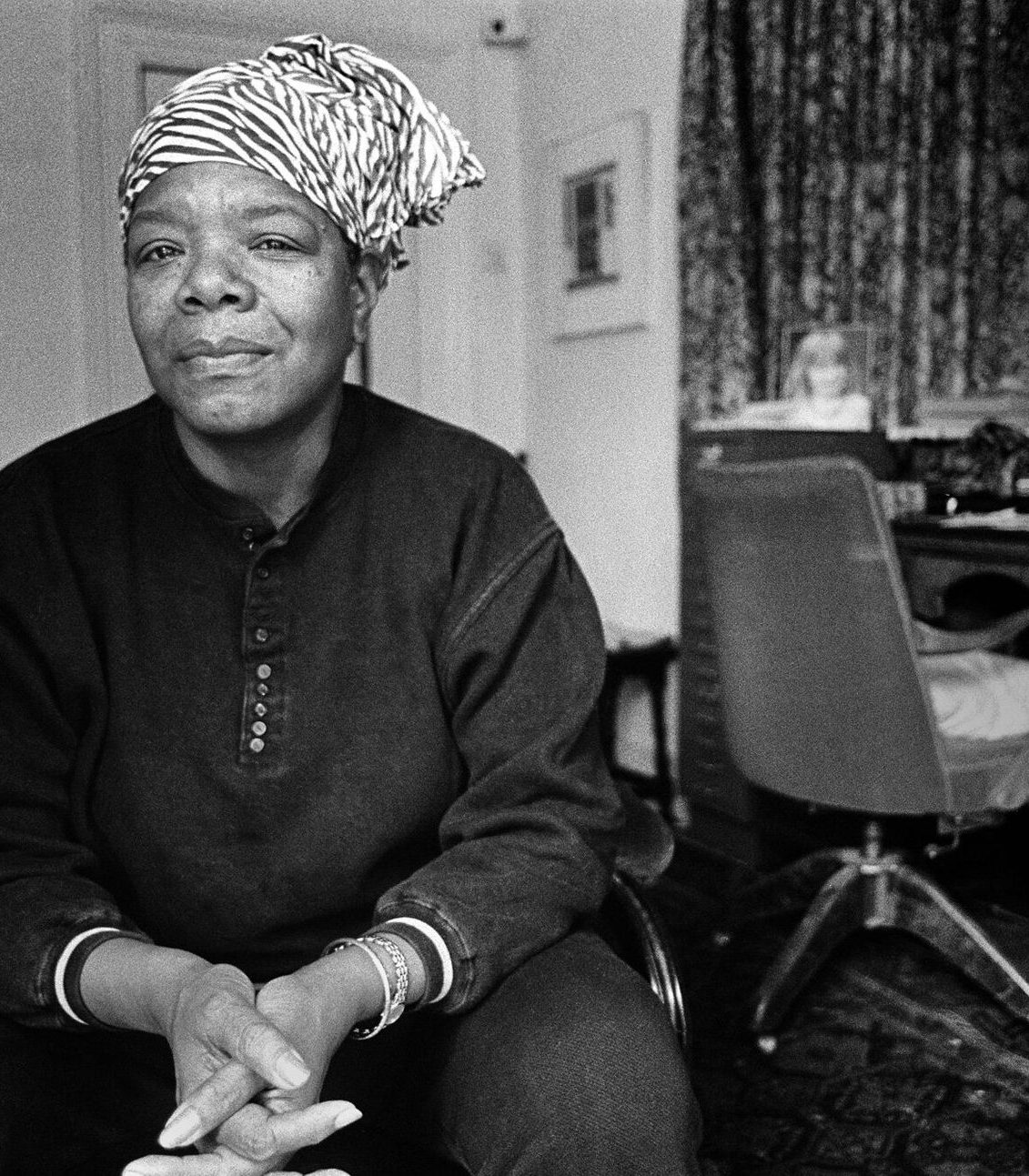
When Maya Angelou spoke, her voice carried an entire people, and, at the same time, all of humanity. She was not only an American icon, but also a literary and cultural bridge across the African diaspora. Her life and work radiate strength, and a continuous struggle for the coexistence of people from diverse backgrounds, rooted in equality and respect. Her writing is not only artistic, it is political, postcolonial, intersectional, spiritual, and global.
A Life Between Silence and Fire
Maya Angelou was born in 1928 in St. Louis, Missouri, as Marguerite Annie Johnson. Her childhood was marked by violence, racism, and fragmentation, but also by literature, rhythm, and resilience. Her experience of falling silent after childhood trauma, and then reclaiming her voice through poetry and storytelling, becomes a powerful metaphor for many diasporic journeys: first lost through displacement and violence, then restored through narrative and memory.
“There is no greater agony than bearing an untold story inside you.”
Her first autobiography, I Know Why the Caged Bird Sings (1969), was a groundbreaking work in the Black feminist tradition, where the personal is political. It exemplifies what scholar bell hooks called the “oppositional gaze”, a way of seeing, speaking, and writing that challenges norms and power structures. Angelou’s story is not just her own, but part of a greater collective memory of Black womanhood, from slave ships to Harlem.
A Voice of the Diaspora – A Transnational Identity
Angelou’s life and writing transcend national borders and take root in the African diaspora, a concept in postcolonial theory (e.g., Paul Gilroy) describing how people of African descent form identities in relation to both ancestral heritage and the lived experiences of colonialism, displacement, and marginalization.
In the 1960s, Angelou lived in Ghana, worked in Egypt, and found spiritual and political grounding through connections with the African continent. She viewed herself as part of a global sisterhood, a bond between Black women across Africa, the Caribbean, the U.S., and Latin America.
“The ache for home lives in all of us, the safe place where we can go as we are and not be questioned.”
Here, Angelou articulates a diasporic longing, not necessarily for a geographical home, but for a space of belonging, where Black lives are seen, respected, and allowed to exist in fullness.
Faith as Compassion, Resistance, and Connection
Maya Angelou had a complex and multifaceted faith that was deeply personal and shaped by many religious and philosophical traditions. Raised in a Christian environment, she was strongly influenced by the Bible, something often reflected in her writing and public speaking. However, her spirituality was never confined to a single doctrine.
Angelou studied and embraced teachings from various belief systems, including Islam, Judaism, Buddhism, and African spiritual practices. She was drawn to a universal spirituality, one that saw common threads in the world’s great religions, particularly in their messages of love, compassion, justice, and human dignity. She believed in God’s presence and the power of prayer, but also emphasized the necessity of critical thought and personal experience.
In her memoirs and interviews, Angelou spoke often of her faith in human goodness and in a higher power that guides and sustains. Her spirituality was expressed not just in words, but in action—through poetry, music, and a lifelong commitment to civil and human rights. For Angelou, faith was inseparable from service; it meant living a meaningful life in solidarity with others.
“I’m working at trying to be a Christian and that’s serious business. It’s like trying to be a good Jew, a good Muslim, a good Buddhist, a good friend, a good lover, a good mother, a good person.”
In this way, her faith was ecumenical and inclusive, rooted deeply in her own journey while open to the beauty and wisdom of many traditions.
Poetry as Bridge, Wound, and Resistance
Angelou’s poem Still I Rise has become a global anthem of resistance. It speaks to marginalized people around the world, women, racialized communities, the displaced, the working class, the queer, with the promise that despite everything, we rise:
“You may trod me in the very dirt / But still, like dust, I’ll rise.”
Here, postcolonial resistance converges with intersectional struggle: gender, race, class, and history are interwoven in every line. Angelou’s work embodies what Kimberlé Crenshaw defines as intersectionality, the understanding that oppression is never singular but always layered.
Diversity and Coexistence – An Ethical Vision
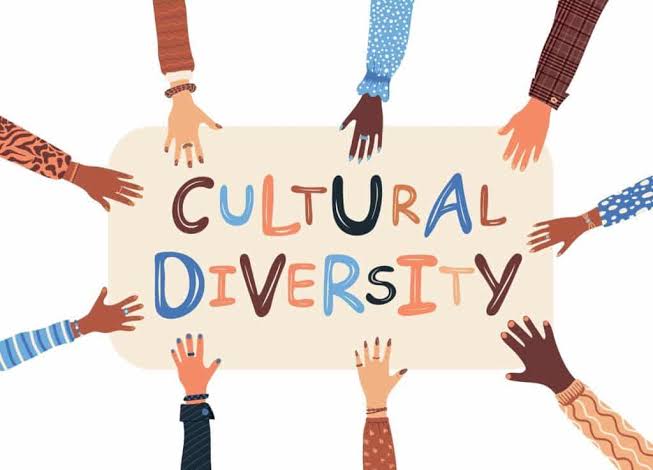
Angelou did not advocate for assimilation but for coexistence. She viewed diversity as a necessary condition for democracy and human flourishing. In a world where difference is often seen as a threat, she instead framed it as a strength and source of healing:
“We all should know that diversity makes for a rich tapestry, and we must understand that all the threads of the tapestry are equal in value no matter their color.”
This is both an ethical and political stance, a defense of pluralism in its truest sense. Angelou did not dream of sameness, but of solidarity through difference.
A Legacy That Will Not Be Silenced
When Maya Angelou passed away in 2014, the world lost a poet, activist, and teacher—but not her words. Her literature continues to serve as a bridge between cultures, continents, and generations. She wrote from the place where language becomes action, and where storytelling becomes a form of witness.
“We may encounter many defeats but we must not be defeated.”
In Maya Angelou’s life, diaspora and feminism, trauma and triumph, spirituality and liberation converge. She is not merely a poet from the United States, she is a voice from the world, to the world.
Reference Framework (For Further Study)
- Angelou, Maya. I Know Why the Caged Bird Sings. Random House, 1969.
- Crenshaw, Kimberlé. “Mapping the Margins: Intersectionality, Identity Politics, and Violence against Women of Color.” Stanford Law Review, 1991.
- Gilroy, Paul. The Black Atlantic: Modernity and Double Consciousness. Harvard University Press, 1993.
- Hooks, bell. Talking Back: Thinking Feminist, Thinking Black. South End Press, 1989.