
The Invisible Fear – The Reality of Girls and Women in Many Countries, Including Western Nations

Despite decades of progress in gender equality, recent developments suggest a disturbing regression. Hard-won rights are being challenged, and the fight for safety and autonomy remains far from over. The notion that gender equality is a given in Scandinavian societies must be questioned, especially when considering the persistent fear and violence that shape the lives of many girls and women.
A striking example of this growing global backlash is a recent post by far-right commentator Nick Fuentes on X, stating: “Your body, my choice. Forever.” This disturbing inversion of the long-standing pro-choice slogan, “My body, my choice,” highlights a growing attempt to reassert male dominance over women’s autonomy. Such rhetoric is not just confined to extremist corners of the internet—it reflects broader societal attitudes that continue to threaten gender equality worldwide.
A Shadow Over Everyday Life
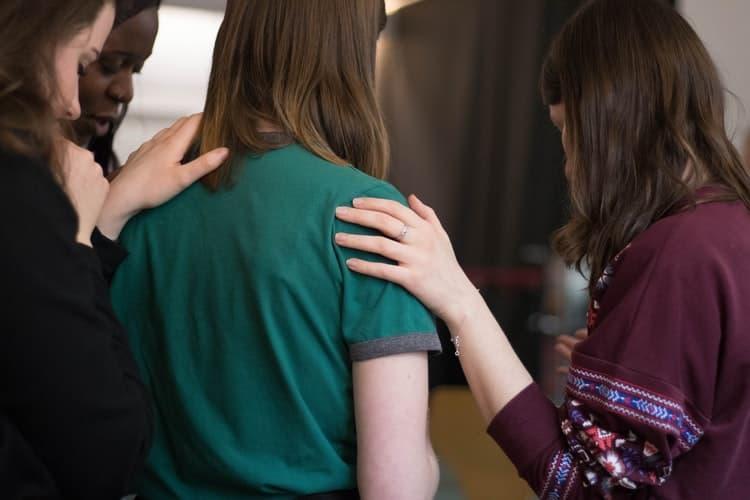
Many girls learn early on how to navigate a reality where avoiding “offending” or “challenging” boys and men becomes necessary. This can involve anything from refraining from speaking up in discussions to adjusting their clothing or avoiding certain locations and situations. Such concerns are far less common for boys.
The issue extends beyond individual violent men; it is also embedded in a culture that normalizes such behavior. Fear of retaliation—whether through physical violence, psychological abuse, or social exclusion—restricts the lives and aspirations of many girls.
Scandinavia – A False Ideal of Safety?
Scandinavian countries, for instance, are often perceived as having advanced further in gender equality compared to others. However, statistics indicate that violence against women remains widespread. According to the Swedish National Council for Crime Prevention (Brå), one in three women in Sweden has experienced violence in a close relationship at some point in their lives. Behind these numbers lies a harsh reality of shame, guilt, and fear of not being believed.
Addressing this issue requires moving beyond policies and legal frameworks. A cultural shift is necessary—one that ensures girls and women can live without fear. Acknowledging the problem is the first step, while taking concrete actions to create change is essential for progress.
Steps Toward Change
Efforts are needed at both individual and societal levels. Discussions on this topic should take place in schools, homes, and public spaces. Boys must be educated to recognize and challenge harmful masculinity norms. Men must take responsibility and actively counteract the culture of silence that enables violence to persist. Moreover, this issue should not be framed as a “women’s problem” but rather as a fundamental human rights concern.
Gender equality is about more than equal pay or representation in leadership positions. It is about ensuring the freedom to live without fear. Rather than assuming Scandinavia is already a safe space, continuous efforts must be made to truly make it one.