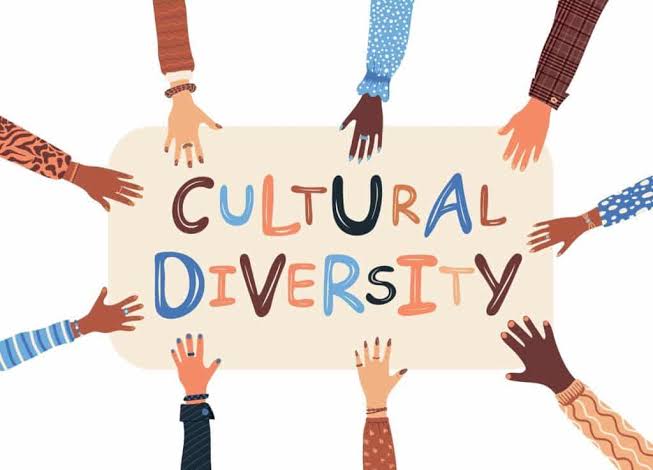

Culture Clashes and the Individual’s Inner Journey

In an increasingly globalized world, intercultural encounters are inevitable. When individuals from different backgrounds interact, situations may arise where ingrained cultural norms, values, and behaviors do not align with the expectations of the new context. These situations, often described as culture clashes, can evoke confusion and uncertainty but also stimulate learning and personal growth. From a cultural psychological perspective, culture clashes extend beyond superficial misunderstandings; they touch upon the individual’s self-concept, identity, and sense of belonging (Berry, 2005).
Theoretical Perspectives
Several cultural psychological theories provide valuable insights. Hofstede’s cultural dimensions demonstrate how differences in, for example, individualism–collectivism and power distance shape interaction and increase the likelihood of clashes (Hofstede, 1991). Markus and Kitayama’s concept of self-construal highlights the contrast between the independent self, which emphasizes autonomy and individuality, and the interdependent self, which prioritizes relationships and group harmony (Markus & Kitayama, 1991). Furthermore, Ting-Toomey’s Face-Negotiation Theory explains why communication conflicts emerge, as cultures vary in their approaches to face-saving and conflict management (Ting-Toomey, 1988).
Psychological Effects on the Individual
Culture clashes can affect the individual on multiple levels:
- Cognitively, by creating confusion or cognitive dissonance when familiar interpretive frameworks fail, but also by prompting reflection and growth (Festinger, 1957).
- Emotionally, by evoking frustration, stress, or insecurity, yet also curiosity and fascination.
- Socially, through the risk of exclusion due to misunderstandings, but also through opportunities to form new relationships (Ward, Bochner & Furnham, 2001).
- Self-efficacy and self-esteem are decisive. Strong self-esteem supports the interpretation of clashes as challenges and opportunities, whereas low self-esteem can intensify feelings of inferiority (Triandis, 1995).
- Peer pressure significantly influences responses. When the majority culture signals certain behaviors as “correct,” individuals may conform despite inner resistance (Asch, 1956).
Illustrative Examples
One illustrative case is for example a European student in Japan, who encounters an academic environment emphasizing respect for hierarchy over independent questioning. In this situation, the student’s independent self collides with an interdependent context. The frustration of not being able to speak up freely can simultaneously act as a catalyst for reflection: why does silence feel uncomfortable?
Another example involves an individual moving from a collectivist culture to a European country. In this context, personal initiative and independence are valued more highly than group harmony. At first, this may lead to identity confusion, but over time the individual may develop a more complex identity that incorporates both interdependent and independent orientations. These examples, however, are only illustrative among countless possible manifestations of culture clashes across different contexts. They serve to highlight mechanisms rather than generalize about specific cultures.
Factors Influencing Outcomes
The outcome of culture clashes is not predetermined but shaped by several factors:
- Personal resources, such as resilience, tolerance for uncertainty, and curiosity (Chen, 2010).
- Social support, where validation from both heritage and host cultures fosters a sense of security (Ward et al., 2001).
- Power dynamics, since inequality may heighten vulnerability or marginalization.
- Voluntariness of the encounter, with self-chosen intercultural engagement generally experienced as less threatening than imposed situations (Berry, 1997).
Strategies for Constructive Adaptation
Turning culture clashes into opportunities requires both individual and contextual strategies. On the individual level, cultural self-awareness is essential to identify and question one’s own assumptions (Triandis, 1995). Empathic listening and reflection help broaden perspectives and reduce defensiveness. Balancing adaptation and integrity is equally crucial: individuals should be able to adjust behavior without sacrificing identity. On a societal level, supportive environments—such as intercultural training, open dialogue, and mentorship—can facilitate the adaptation process (Deardorff, 2006).
Conclusion
In conclusion, culture clashes are not merely misunderstandings but dynamic processes that shape the cognitive, emotional, and social dimensions of the individual. Cultural psychological theories show that outcomes depend on factors such as self-esteem, self-efficacy, social support, and the voluntariness of the encounter. As the examples demonstrate, culture clashes may pose challenges but also hold transformative potential.
With awareness, reflection, and strategic adaptation, individuals can not only manage but also utilize culture clashes as resources for learning, identity development, and enhanced intercultural competence. By balancing adaptation with integrity, and practicing empathy and self-reflection, intercultural encounters cease to threaten identity and instead become opportunities for deeper understanding of both oneself and others.
References
- Asch, S. E. (1956). Studies of independence and conformity: I. A minority of one against a unanimous majority. Psychological Monographs, 70(9).
- Berry, J. W. (1997). Immigration, acculturation, and adaptation. Applied Psychology, 46(1), 5–34.
- Berry, J. W. (2005). Acculturation: Living successfully in two cultures. International Journal of Intercultural Relations, 29(6), 697–712.
- Chen, G.-M. (2010). The impact of intercultural sensitivity on ethnocentrism and intercultural communication competence. Intercultural Communication Studies, 19(1), 1–9.
- Deardorff, D. K. (2006). The identification and assessment of intercultural competence. Journal of Studies in International Education, 10(3), 241–266.
- Festinger, L. (1957). A theory of cognitive dissonance. Stanford University Press.
- Hofstede, G. (1991). Cultures and organizations: Software of the mind. McGraw-Hill.
- Markus, H. R., & Kitayama, S. (1991). Culture and the self: Implications for cognition, emotion, and motivation. Psychological Review, 98(2), 224–253.
- Ting-Toomey, S. (1988). Intercultural conflict styles: A face-negotiation theory. In Y. Y. Kim & W. B. Gudykunst (Eds.), Theories in intercultural communication (pp. 213–235). Sage.
- Triandis, H. C. (1995). Individualism and collectivism. Westview Press.
- Ward, C., Bochner, S., & Furnham, A. (2001). The psychology of culture shock. Routledge.