
Identity in the Diaspora: Between Memory, Belonging and the Public Debate

When people leave their homelands to settle elsewhere, they carry with them not only their possessions but also languages, memories, values and cultural practices. In the encounter with the new country, a dynamic emerges that shapes not only individual identities but also the public debate and development in both the country of origin and the new homeland.
Between “both-and” and “neither-nor”
Diasporic identity is often described as a “both-and” identity, a creative combination of different belongings in which individuals feel connected to multiple worlds simultaneously. But just as often, the experience may be a “neither-nor” identity. When the new country does not recognize one’s background as legitimate, and the homeland no longer considers one “one of us,” a sense of exclusion arises that can be both damaging and dangerous.
From a postcolonial perspective, these processes of identity are not taking place in a vacuum but at the intersection of power relations, historical narratives and global inequalities. What is perceived as “different” is often shaped by colonial categories that continue to structure societies. Here we also see the logic of intersectionality: diasporic experiences vary greatly depending on class, gender, religion, sexuality and skin color. A woman in the diaspora faces different challenges than a man, a refugee different ones than a highly skilled expat.
Identity politics plays a double role: it can create solidarity and empowerment among marginalized groups, but it can also lock identities into rigid categories and be weaponized in public debate.
Mechanisms behind the outcomes
- Social inclusion vs. exclusion: The possibility of being integrated into the majority society strongly influences which type of identity emerges.
- The homeland’s gaze: Being perceived as either “traitors” or “ambassadors” affects how diasporans view their own place in and between cultures.
- Agency: Some consciously create hybrid identities that foster pride and resilience, while others become lost in a void of non-belonging.
Gains and losses
Diasporic life can bring unique gains: linguistic and cultural multiplicity, flexibility in identity, and the ability to build bridges between societies. Yet it also entails clear losses: rootlessness, lack of recognition, and the constant demand to “prove” belonging.
For the individual, this means a constant balancing act between security and vulnerability. For societies, it brings both opportunities for diversity and risks of social fragmentation, with tangible dangers of exclusion and conflict.
Shifts over time
Historically, diasporas often functioned as resources for both homeland and host country – through remittances, knowledge transfer and diplomacy. In today’s climate, however, with rising racism, marginalization and discrimination, we see changing patterns. Identity politics is hardening, and public debate is becoming more polarized.
In the host country, issues of loyalty, culture and religion are frequently weaponized in political rhetoric. In the homeland, diasporas may be idealized as modernizing forces but also rejected as “too foreign” or “detached from reality.”
The public debate as a mirror
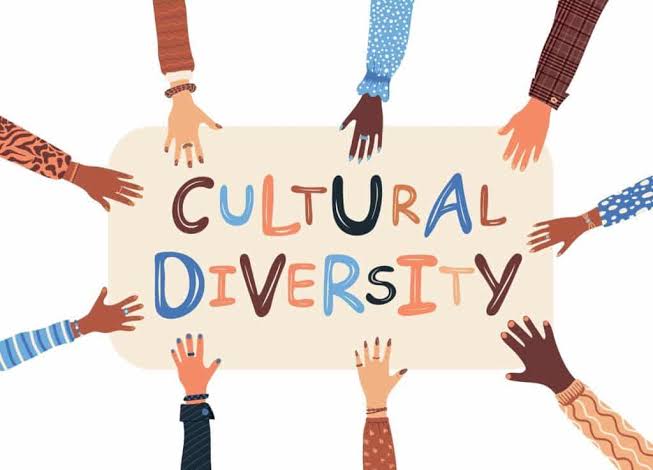
Diasporic identities become mirrors that reflect broader societal challenges. When individuals in the diaspora succeed in creating inclusive “both-and” identities, they can enrich public debate and development with new perspectives, cultural expressions and social innovation. When, however, they are pushed into “neither-nor” positions through discrimination and marginalization, they risk retreating into parallel communities where mistrust and conflict grow.
Ultimately, the question is what kind of public debate and development we want: one that recognizes complexity and diversity, or one that simplifies and excludes. The experiences of the diaspora are therefore not only about identity but also serve as catalysts for larger discussions about democracy, justice and human belonging.